5 Black's Rd, London
Until 25 Sept
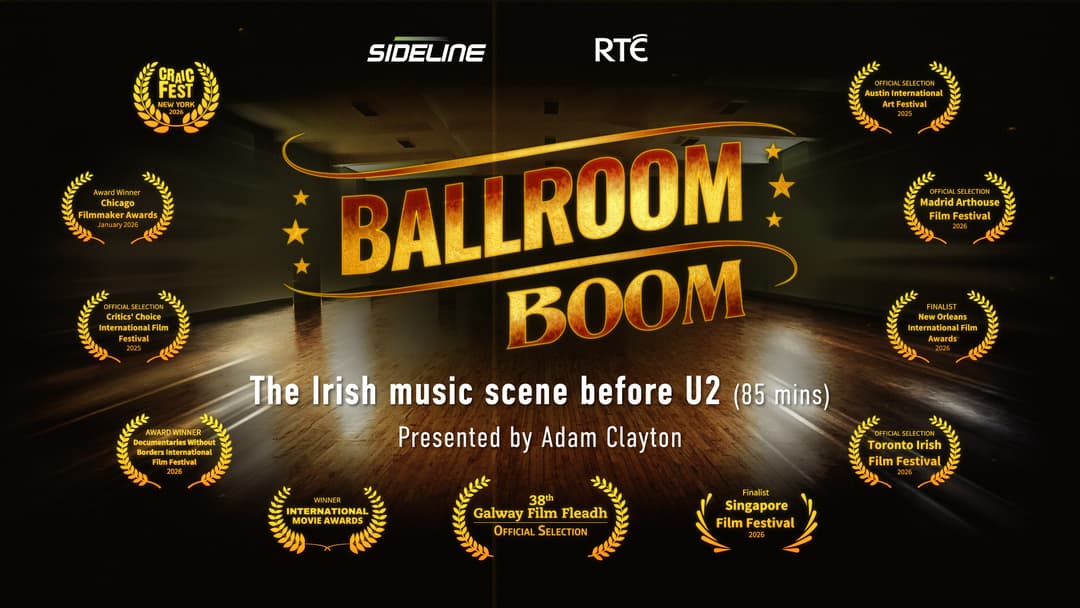
Feature documentary about the birth of popular Irish music, coming to the ICC straight from it’s European premiere at the 36th Galway Film Festival. This Screening will be followed by a Q&A with the Director Billy McGrath. Ballroom Boom has already celebrated sold-out screenings in New York, Chicago, Austin, Singapore, Toronto, and Galway. Now its London’s turn! Sideline Productions international hit ‘Ballroom Boom with U2’s Adam Clayton explores what the Irish music scene was like before U2 started. Central to the story was the Irish showband, which dominated Ireland’s music scene in the 1960s. With contributions from Eileen Reid, Dickie Rock, Bob Geldof, Aonghus McAnally, Paddy Cole, Ronan Collins, Phil Coulter, Brendan Bowyer, Ultan Conlon, Linda Martin plus historians and journalists, these seven/eight-piece groups, including future legends Van Morrison and Rory Gallagher, performed an eclectic mix of waltzes, Irish music, jazz and pop hits in ballrooms across the country. It is estimated there were around 700 Irish showbands at the height of the ‘ballroom boom’ — and their popularity wasn’t confined to Ireland. Some 60 years before U2’s residency at The Sphere in Las Vegas, Irish showbands were packing out ballrooms in Sin City, New York, Boston and Chicago, managed by the colourful Irish-born promoter Bill Fuller who once owned over twenty venues world-wide – including The Fillmore West in San Francisco, Teach Furbo in Galway and The Electric Ballroom in London, which today is run by his daughter Kate, who appears in the film. One shocking event, however, tore the Irish music scene apart. On July 31, 1975, three members of The Miami — then Ireland’s most popular showband — were gunned down in Northern Ireland by rogue British soldiers. That tragedy dealt a devastating blow to Ireland’s live music scene, leading to touring musicians fearing for their safety and mass cancellation of cross-border dances. By the mid-1970s, ballroom audiences were declining, as new licensed venues and hotels offered alcohol, comfort, and food. As a result, licensed discos flourished, and astute showband singers moved into cabaret. Ballroom Boom also examines the showband’s role in the development of the Irish music industry and its social and cultural impact on a generation of young people now embracing social and political movements across the world. In the 1970s, new Irish universities flourished and young musicians, already immersed in rock, pop, and soul, turned their back on the copycat showbands. Progressive new outfits like Horslips, The Bothy Band, The Johnsons, Mushroom, The Chieftains, Planxty and Clannad experimented with trad/folk and rock and won over a hungry audience, primed to embrace their own indigenous culture. As a result, joining a ‘human jukebox’ was not the only option for ambitious young musicians and songwriters. Soon showbands were off the menu!
Not the same tradition as the lineage above — a genuinely different thread to pull, if you want one.